Arc Flash Risk Assessments in Florida
Arc Flash Risk Assessments
Identify Electrical Hazards Before They Become Emergencies
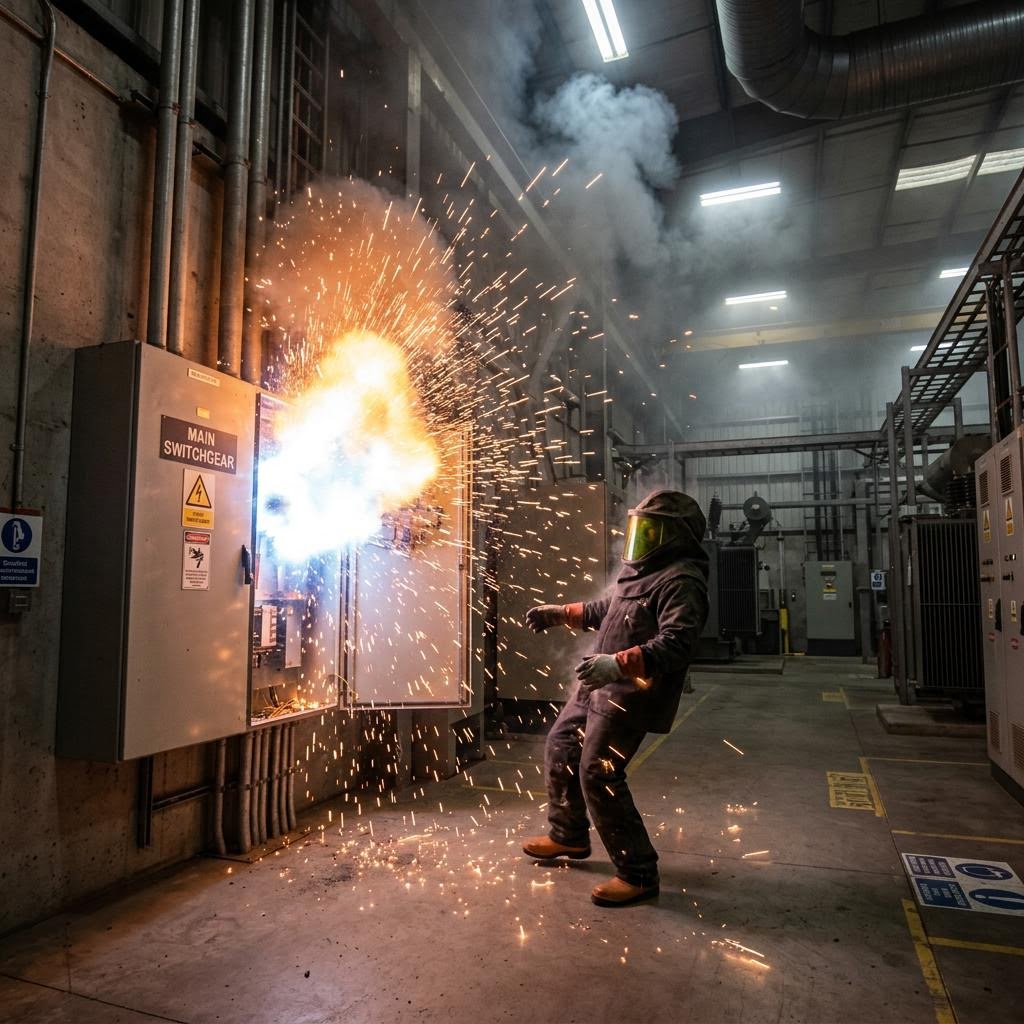
An arc flash risk assessment helps your organization identify electrical hazards before they result in an injury, equipment damage, operational disruption, or costly emergency. It provides facility owners, employers, safety managers, and electrical personnel with the information needed to make informed decisions about electrical work practices, protective boundaries, equipment labels, and personal protective equipment.
Everything Arc Flash provides professional arc flash risk assessments for commercial, industrial, institutional, healthcare, government, and property-management facilities in Lake Worth, West Palm Beach, Palm Beach County, and throughout Florida.
Our assessments are designed to help you better understand the electrical hazards within your facility and develop practical measures for protecting employees who work on or near energized electrical equipment.

What Is It?
What Is an Arc Flash Risk Assessment?
An arc flash risk assessment is a systematic evaluation of a worker's potential exposure to the thermal energy produced by an electrical arc.
The completed assessment gives your organization equipment-specific information that can be used during job planning and electrical safety decision-making.
An arc flash assessment should not be confused with a visual inspection or the application of generic warning stickers. Accurate analysis requires current electrical-system information and an evaluation of how the system and its protective devices respond under fault conditions.
Learn more about arc flash safety training to complement your assessment program.
Depending on scope, the assessment may evaluate:
Why Your Facility May Need an Arc Flash Study
When Is an Arc Flash Study Needed?
Employees who inspect, operate, maintain, troubleshoot, test, or repair electrical equipment may be exposed to shock and arc flash hazards. An arc flash risk assessment may be appropriate when:
Even electrical systems operating at lower voltages can produce a dangerous arc flash under the right conditions. Voltage alone does not determine the severity of an event. Available current, protective-device clearing time, equipment configuration, working distance, and other factors can significantly affect incident energy.
What Is Included
What Is Included in an Arc Flash Risk Assessment?
The exact scope depends on the size, complexity, condition, and documentation of your electrical distribution system. A comprehensive project may include the following stages.
Project Planning & Scope Development
The process begins by identifying the facility areas, electrical systems, equipment, and operating conditions to be evaluated.
- Facility size and use
- Electrical-service characteristics
- Available drawings and records
- Equipment types
- Previous studies
- Existing arc flash labels
- Planned electrical upgrades
- Maintenance practices
- Employee work activities
- Operational or scheduling restrictions
Defining the scope at the beginning of the project helps create an efficient assessment and a useful final report.
Electrical Data Collection
Accurate study results depend on accurate field data. Electrical equipment and distribution-system information may need to be gathered from drawings, nameplates, protective devices, conductor information, settings, and available utility data.
- Utility-service information
- Transformer ratings and impedances
- Switchgear and switchboard data
- Panelboard information
- Circuit-breaker types and settings
- Fuse types and ratings
- Conductor sizes and lengths
- Motor contributions
- Generator information
- Equipment grounding details
- System voltage
- Equipment configuration
- Normal operating conditions
Missing or inconsistent information may be documented for further review.
One-Line Diagram Review
A one-line diagram provides a simplified representation of the electrical distribution system and the relationships between major components.
- Understand how electrical power moves through the facility
- Identify upstream and downstream equipment
- Locate protective devices
- Support maintenance and troubleshooting
- Improve job planning
- Document system changes
- Prepare for future electrical studies
Where appropriate, the project may include reviewing, updating, or developing electrical one-line information based on the agreed scope.
Short-Circuit Analysis
A short-circuit analysis calculates the current that may flow during specific electrical fault conditions. The results can help determine whether equipment and protective devices are appropriately rated for the available fault current. Short-circuit information is also an important input for incident-energy calculations.
Equipment with an interrupting or withstand rating below the calculated fault current may require additional engineering review and corrective action.
Protective-Device Coordination Review
Protective devices are intended to interrupt abnormal electrical current. Their settings and operating characteristics influence how quickly a fault is cleared. Because the duration of an electrical arc can significantly affect incident energy, protective-device performance is an important part of an arc flash study.
- Protective devices that operate more slowly than expected
- Settings that contribute to higher incident-energy levels
- Opportunities to improve system selectivity
- Potential conflicts between reliability and worker protection
- Areas requiring additional evaluation
Changes to protective-device settings should be carefully evaluated before implementation because they may affect equipment protection, system coordination, reliability, and safety.
Incident-Energy Analysis
Incident energy is the amount of thermal energy that may reach a surface at a specified working distance during an arc flash event. It is commonly expressed in calories per square centimeter.
- Available fault current
- Arc duration
- Protective-device clearing time
- System voltage
- Equipment type and enclosure
- Electrode configuration
- Working distance
The calculated value can be used to help determine the arc flash boundary and the arc rating of PPE needed for a particular task or exposure.
Arc Flash Boundary Determination
The arc flash boundary is a distance from a potential arc source at which the incident energy is expected to reach a specified threshold. Employees working within an established arc flash boundary may require additional protective measures based on the task, equipment condition, likelihood of occurrence, and calculated exposure.
The arc flash boundary is different from shock-protection approach boundaries. A complete electrical safety program should address both arc flash and electric-shock hazards.
Equipment Label Development
Arc flash labels communicate critical hazard information to employees who may interact with electrical equipment.
- Nominal system voltage
- Arc flash boundary
- Calculated incident energy at the working distance
- Minimum arc rating of clothing or PPE
- Equipment identification
- Shock approach information
- Study or issue date
Labels should reflect the results of the facility's assessment. Generic labels that are not based on the actual electrical system cannot communicate equipment-specific incident-energy information.
Findings & Recommendations
What the Final Report Covers
The final report may identify equipment, conditions, or study results requiring attention. Recommendations may address:
The report should give management a practical roadmap rather than simply presenting calculations without context.
Understanding High Incident-Energy Results
High Incident-Energy Doesn't Always Mean More PPE
Some equipment may have incident-energy levels that make energized interaction especially hazardous. A high calculated value does not mean that selecting heavier PPE is always the only or best response. The organization should first evaluate whether the work can be performed in an electrically safe work condition and whether the hazard can be reduced through engineering, maintenance, administrative, or operational controls.
Potential risk-reduction strategies may include:
Every proposed modification should be evaluated for its effect on system safety, reliability, coordination, and equipment protection.
Arc Flash Labels Are Not the Entire Safety Program
Labels Alone Are Not Enough
Applying labels is an important outcome of many arc flash studies, but labels alone do not create an effective electrical safety program. Your organization may also need:
Everything Arc Flash can help connect your study results with broader arc flash facility compliance, NFPA 70E safety training, and arc flash PPE selection guidance.
Keep Your Study Current
When Should an Assessment Be Updated?
An arc flash study should be reviewed when changes to the electrical system or facility could affect the results. A review may be needed following:
Do not assume an existing label remains accurate after the equipment or its upstream electrical system has changed.
Facilities & Industries We Serve
Who We Work With
Everything Arc Flash provides electrical risk assessment services for a wide range of facilities. Projects can be scoped for a single building, a campus, or multiple facilities based on the organization's requirements.
Service Area
Lake Worth & Palm Beach County
Everything Arc Flash is based in Lake Worth, Florida, and provides arc flash studies and electrical safety services throughout Palm Beach County and other areas of Florida. Our service area includes:
Local knowledge and responsive project coordination can be especially valuable when an assessment requires facility access, electrical data collection, discussions with maintenance personnel, and follow-up implementation support.
Why Choose Everything Arc Flash?
Why Clients Choose Us
Everything Arc Flash specializes in arc flash hazards, NFPA 70E electrical safety, and facility compliance. Our goal is not simply to deliver calculations. We help organizations understand what the findings mean, how employees may be affected, and what actions should be considered next.
Frequently Asked Questions
Common Questions About Arc Flash Risk Assessments
Contact Everything Arc Flash
Don't Wait for an Incident, Audit Finding, or Equipment Failure
Everything Arc Flash can help you evaluate your electrical system, identify arc flash hazards, develop equipment-specific information, and create a practical plan for improving workplace electrical safety.
- 1-888-NFPA70E
or 1-888-637-2703
7855 Willow Spring Drive, Suite 715
Lake Worth, FL 33467
- Monday–Friday, 8:00 a.m.–3:00 p.m.
Everything Arc Flash