Arc Flash Risk Assessments in West Palm Beach, FL
Professional arc flash risk assessments in West Palm Beach, FL. Improve electrical safety with arc flash studies, hazard analysis, and NFPA 70E guidance.

Electrical distribution equipment supports daily operations across West Palm Beach, from commercial offices and healthcare buildings to industrial workplaces and municipal facilities. A problem at a switchboard, distribution panel, motor-control center, or disconnect can expose employees to serious hazards. Understanding those hazards requires more than checking whether equipment is operating normally.
Everything Arc Flash provides arc flash risk assessments in West Palm Beach, FL, to help facility managers evaluate electrical hazards and plan safer work. An assessment brings together information about the electrical system, the equipment involved, and the tasks employees perform. An arc flash study can provide calculated incident energy and boundary information, while the broader risk assessment considers how that information affects workplace decisions.
For a property manager overseeing several buildings or a maintenance supervisor responsible for one facility, the goal is usable information: an understandable scope, documented findings, and practical next steps that support electrical safety planning without treating a report as a substitute for safe work practices.
Arc Flash Assessments for West Palm Beach Facilities
Different facilities create different assessment priorities. A downtown office property may need to coordinate access around tenants. A healthcare facility may have essential electrical loads and emergency power arrangements. An industrial operation may include motors, production equipment, and changing operating configurations. Municipal facilities may need to organize records across buildings with different ages and equipment histories.
The assessment scope should reflect the actual electrical infrastructure rather than assume every commercial building has the same exposure. West Palm Beach facility managers can prepare by identifying the equipment employees operate or maintain, the condition of existing labels, available one-line diagrams, and any planned construction or electrical changes. That preparation helps distinguish immediate documentation gaps from longer-term improvements.
- F01Commercial buildings and tenant-occupied properties
- F02Healthcare facilities and medical office buildings
- F03Office complexes and institutional workplaces
- F04Industrial operations and municipal facilities
What Is Involved in an Arc Flash Study?
- 01
An arc flash study evaluates the potential thermal energy associated with an electrical arc under defined conditions. Relevant inputs can include available fault current, protective-device characteristics, conductor information, equipment configuration, and working distance. Protective-device clearing time is particularly important because the duration of an arc affects the calculated exposure.
- 02
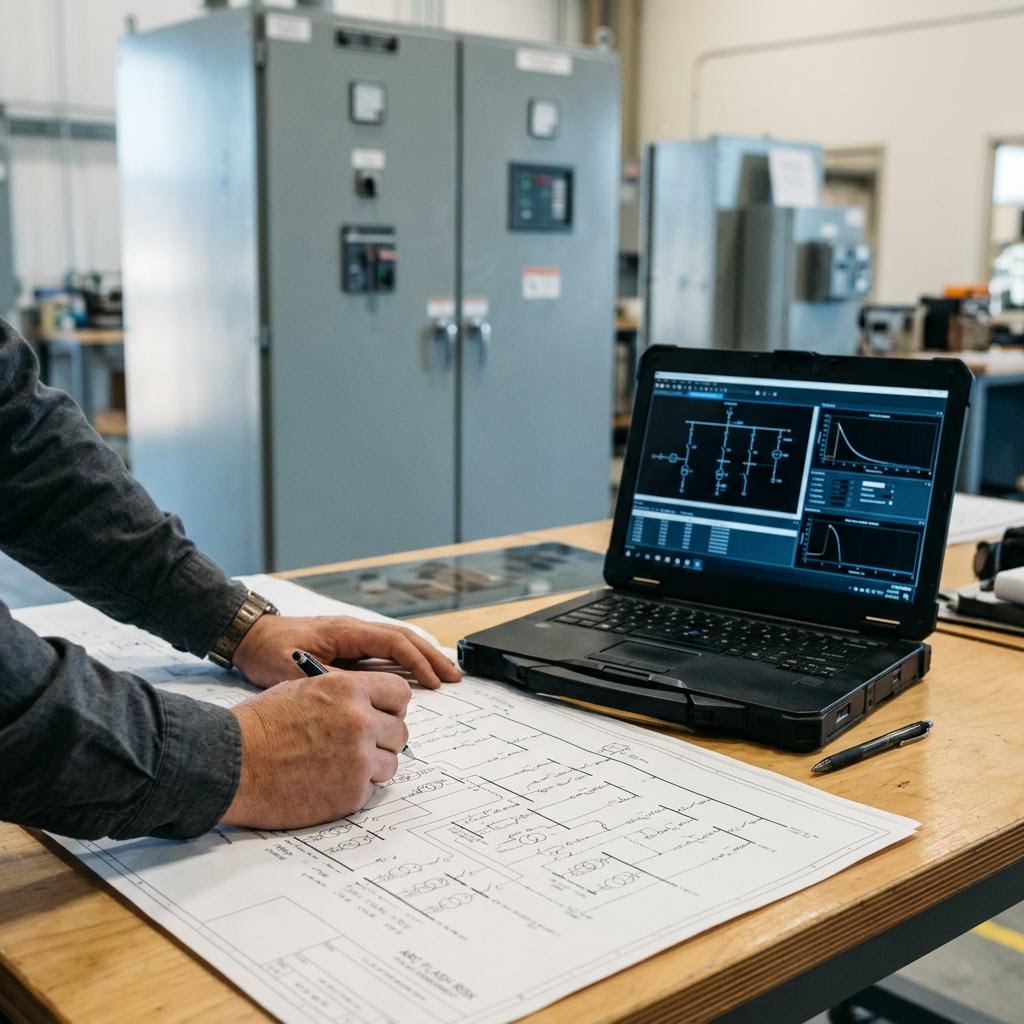
The work normally begins with a review of existing records and an agreed equipment list. Field information may then be collected to confirm equipment details and system connections. Depending on the project scope, the analysis may involve reviewing one-line diagrams, short-circuit calculations, protective-device coordination, and incident energy results. Missing information and assumptions should be identified rather than concealed behind apparently precise numbers.
- 03
Our Arc Flash Risk Assessment Process explains how project planning, data collection, analysis, and reporting fit together. Reviewing the process before a site visit helps your West Palm Beach team gather useful records and coordinate appropriate equipment access.
Assessment Deliverables That Support Daily Work
An effective project should leave your facility with information employees can understand and management can maintain. The exact deliverables depend on the agreed scope and the available system data. Before work begins, clarify which equipment is included, whether drawing updates are needed, and how calculated findings will be communicated.
- D01Equipment identification and the electrical systems included in the assessment
- D02Documented analysis inputs, assumptions, and operating conditions
- D03Incident energy and arc flash boundary information where applicable
- D04Equipment labeling information and findings requiring further action
A report should also make limitations clear. For example, inaccessible equipment or unavailable utility information can affect what can be confirmed. Facility managers should keep the final documentation with electrical records and use it when planning maintenance, evaluating modifications, and communicating with qualified personnel. A label alone does not explain every hazard or authorize energized work.
When Should Your Facility Review Its Assessment?
A West Palm Beach business may seek an assessment because it has no previous study, cannot verify the basis for existing labels, or has inherited incomplete records after a property acquisition. Other triggers include renovations, replacement switchgear, additional transformers, protective-device setting changes, or a new source of electrical power.
Changes outside the building can matter as well. Utility-system changes can affect available fault current, while internal operating changes can alter the conditions represented in an older study. NFPA 70E calls for updating the assessment when major modifications or renovations occur and reviewing it at intervals not exceeding five years. A change can therefore require attention before the next scheduled review.
Do not wait for an incident to investigate missing documentation. If employees need to work on or near equipment without reliable hazard information, involve qualified personnel and review work controls before the task proceeds. Assessment planning should support safe operations, not create a reason to bypass established procedures.
Using Findings to Support NFPA 70E Electrical Safety
An arc flash risk assessment is one component of an electrical safety program. It can support hazard identification, job planning, and selection of protective measures, but it does not independently guarantee compliance. Employers still need appropriate procedures, qualified workers, task-specific evaluations, maintenance practices, and oversight of electrical work.
Establishing an electrically safe work condition should be prioritized where required. An arc flash calculation is not permission to work energized. Shock hazards also require separate consideration: an arc flash boundary is not a shock approach boundary, and arc-rated clothing does not replace the controls needed for electric shock protection.
Arc Flash PPE Selection Guidance can help your team understand how equipment information relates to protective equipment decisions. PPE must be appropriate to the actual task and exposure, and it remains part of a broader system of controls.
Preparing Your West Palm Beach Team
Gather available electrical drawings, earlier study reports, equipment schedules, and records of recent changes. Identify a facility contact who understands access restrictions and can coordinate with the people responsible for electrical maintenance. For tenant-occupied and healthcare properties, discuss scheduling needs before arranging field activities.
Information gathering must be planned safely. Do not ask unqualified employees to remove covers or approach exposed energized parts simply to obtain study inputs. Equipment access, isolation, and any necessary shutdown coordination should be handled under the facility's electrical safety procedures by appropriately qualified people.
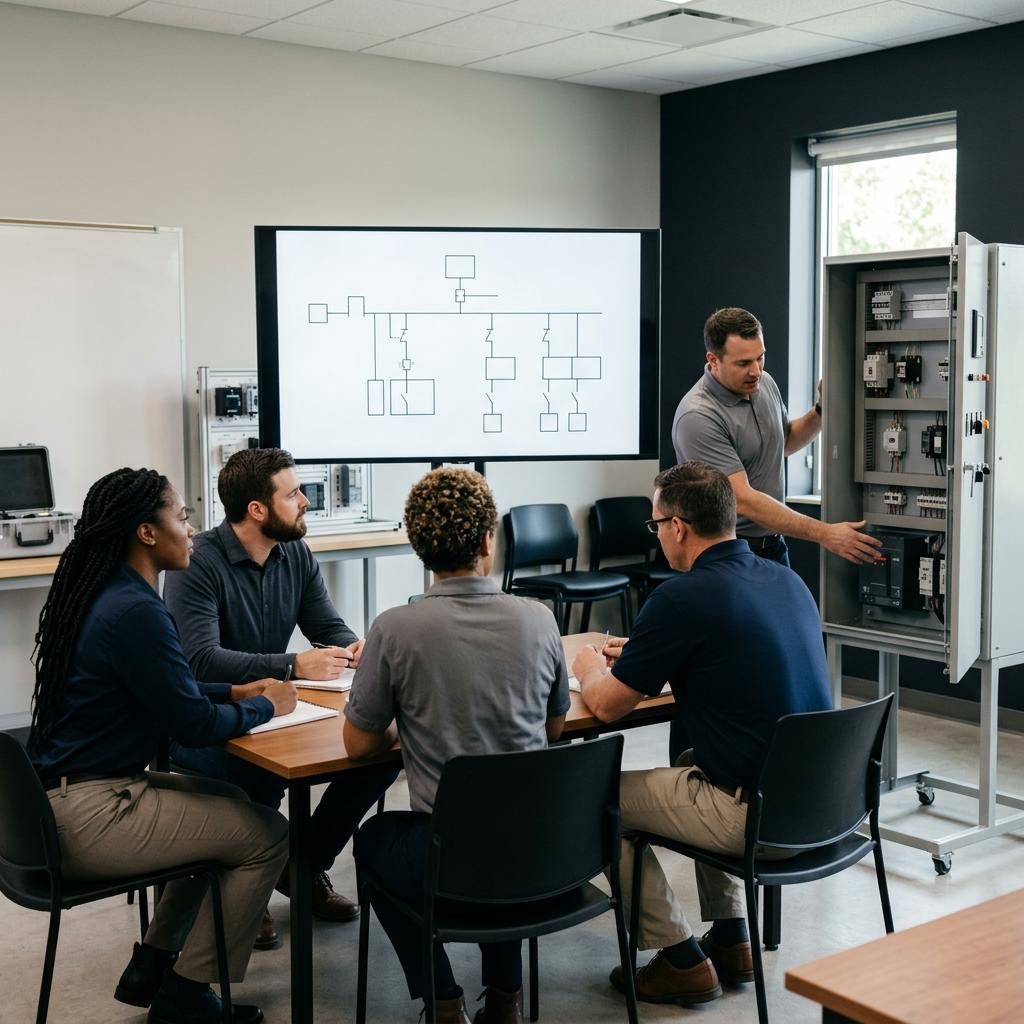
Pairing assessment findings with Arc Flash Safety Training helps personnel understand the information they will use during job planning. Our existing West Palm Beach training page covers the related training service without replacing the equipment-specific assessment.
Plan the scope around your actual West Palm Beach facility.
West Palm Beach Arc Flash Risk Assessment FAQs
Is an arc flash study the same as an arc flash risk assessment?
Not exactly. A study commonly refers to the engineering analysis used to calculate incident energy and arc flash boundaries. A risk assessment also considers the likelihood and severity of harm for the equipment and tasks involved, together with the protective measures needed. The calculation supports the assessment rather than replacing it.
Can an existing equipment label be used without the original report?
A label may provide useful information, but its basis, date, equipment identity, and operating assumptions should be verified. If the source report is missing or the electrical system has changed, the information may no longer represent current conditions. Discuss those gaps before relying on the label for work planning.
Will a West Palm Beach assessment require a shutdown?
That depends on the equipment, available records, and access required. Some information may be available from drawings and accessible nameplates, while other data collection can require controlled equipment access or a planned outage. Scheduling should be agreed after reviewing the facility and its safety requirements.
Does an assessment replace employee electrical safety training?
No. Assessment documentation describes hazards and relevant system information; training helps employees understand their responsibilities and use that information appropriately. Qualified-person requirements, safe work practices, and task planning remain necessary even when equipment has current arc flash labels.
What should I provide when requesting an assessment?
Provide the facility location, building use, available drawings, approximate equipment scope, existing study information, and known electrical changes. Mention tenant access, essential operations, and shutdown restrictions so the project can be scoped around your actual West Palm Beach facility.
Contact Everything Arc Flash for West Palm Beach Assessments
Contact Us to discuss an arc flash risk assessment in West Palm Beach, FL. Tell us about your commercial, industrial, healthcare, office, or municipal facility, the condition of your existing electrical records, and the work your personnel perform. Everything Arc Flash can discuss an appropriate assessment scope and the related electrical safety services your team needs.
Call 1-888-NFPA70E / 1-888-637-2703 or email info@everythingarcflash.com. For other nearby locations, review our service areas and the dedicated Lake Worth risk assessment page.