Arc Flash Risk Assessments in Lake Worth, FL
Need an arc flash risk assessment in Lake Worth, FL? Everything Arc Flash provides arc flash studies, hazard analysis, and electrical safety services.
Everything Arc Flash is based in Lake Worth, Florida, and provides arc flash risk assessment services for local commercial, industrial, and institutional facilities. Working with a locally based company gives facility teams a direct point of contact for discussing site conditions, reviewing existing documentation, and coordinating assessment activities around normal operations.
Electrical hazards are not limited to large manufacturing plants. A warehouse, maintenance facility, office property, or institutional building can contain distribution equipment that exposes workers to serious risk during particular tasks. The important questions are what equipment is present, how it is maintained, and what employees must do on or near it.
An arc flash risk assessment in Lake Worth helps organize those questions into a documented process. Arc flash studies and hazard analysis provide information for electrical safety planning, while task-specific decisions, training, and work controls determine how that information is used. The objective is to understand the exposure before someone begins work, not after a close call.
Local Assessment Support for Lake Worth Operations
Local coordination matters when access to electrical rooms must be arranged around tenants, deliveries, production, or maintenance schedules. A Lake Worth facility may have drawings held by a property manager, operating knowledge held by maintenance personnel, and modification records held by outside contractors. Bringing those records together is an important first step.
Everything Arc Flash works with facility contacts to understand the equipment and activities being evaluated. Being locally based does not change the technical requirements of the assessment; accurate data and safe access are still essential. It does, however, give nearby businesses a clear place to start when they need electrical safety assistance tied to their own operations.
- F01Commercial properties and multi-tenant buildings
- F02Warehouses and distribution workplaces
- F03Manufacturing operations and maintenance facilities
- F04Institutional properties and supporting building systems
Identify Electrical Hazards Before Work Begins
- 01
Electrical equipment can appear routine to the people who operate it every day. That familiarity should not replace an evaluation of the task. Troubleshooting, testing, opening equipment, and interacting with damaged or poorly maintained components can involve different exposures from normal operation of properly installed and maintained equipment.
- 02
An arc flash risk assessment considers the potential severity of injury and the likelihood of an arc flash event for the activity involved. An incident energy calculation supports that evaluation, but a calculated number does not describe every possible task or equipment condition. Shock protection must also be evaluated separately.
- 03
Lake Worth employers should establish appropriate procedures before workers approach exposed electrical hazards. Whenever an electrically safe work condition is required, the process includes more than switching equipment off. Isolation, lockout/tagout, verification, and other required steps belong within the facility's electrical safety program and must be performed by appropriately qualified personnel.
How the Lake Worth Assessment Process Works
Define the equipment and operating conditions
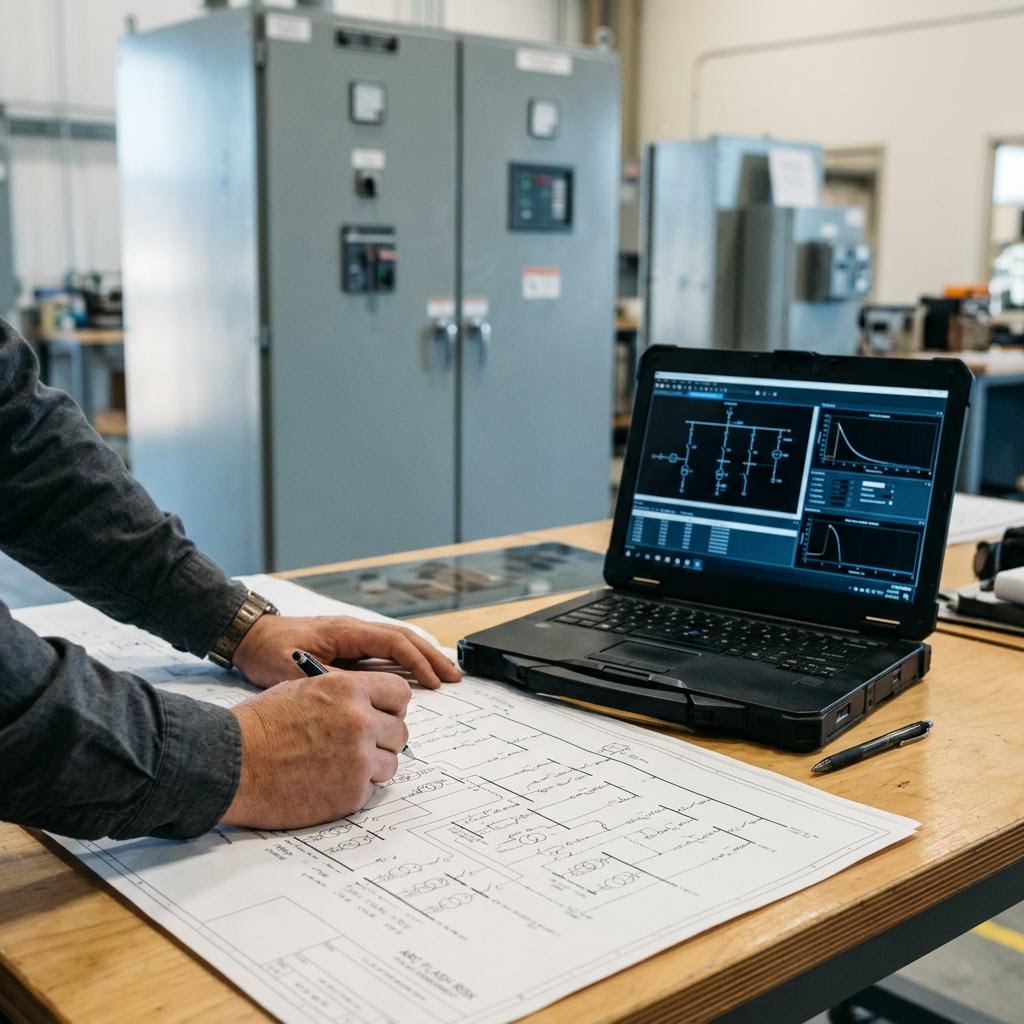
Start by identifying the areas of the facility to be included and the equipment employees operate, inspect, or maintain. Existing reports, one-line drawings, labels, and recent installation records help establish the starting point. The scope should identify any important operating arrangements, including standby power or equipment normally supplied through different sources.
Collect and evaluate reliable electrical data
Depending on the agreed scope, information may include utility fault-current data, transformer ratings, conductor details, protective-device types and settings, and equipment configuration. Field observations are used to check records, not to assume that old drawings still match the installation. Unknown data and access limitations should be recorded for review.
Translate the findings into usable documentation
Analysis results can inform incident energy values, arc flash boundaries, equipment labeling, and recommendations for further action. A useful final package explains what was studied and the conditions represented. Our Arc Flash Risk Assessment Process provides a detailed overview of these stages.

Arc Flash Studies for Warehouses and Manufacturing
Warehouses and manufacturing facilities in Lake Worth may rely on motors, conveyors, compressors, HVAC equipment, pumps, and distribution panels. Changes made to keep production moving can accumulate over time. A replacement motor, added production line, or revised protective-device setting may not be reflected in the records employees use.
An assessment provides an opportunity to compare the documented system with the facility's current arrangement. The project should consider the intended scope and relevant operating modes rather than treat each panel as an isolated item. Maintenance supervisors can contribute by identifying equipment with recurring problems, missing labels, or uncertain supply arrangements.
An assessment should not require a worker to take an unplanned electrical risk just to obtain a nameplate reading. Agree on equipment access and outage needs in advance. Where information cannot be collected safely under current conditions, document the limitation and plan an appropriate way to resolve it.
Using Reports, Labels, and PPE Information
Equipment labeling helps communicate relevant hazard information at the point of work. It is most useful when the label can be traced to a current report, the equipment identity is clear, and the conditions represented remain applicable. Labels should not be copied from similar-looking equipment or treated as permanent despite system changes.
Protective equipment decisions require more than selecting clothing with a convenient rating. The task, electrical exposure, working distance, equipment condition, and applicable assessment method matter. Arc-rated equipment does not replace shock protection, and neither type of PPE removes the need for safer work methods.
Arc Flash PPE Selection Guidance explains the relationship between hazard information and personal protective equipment. Use that guidance alongside the study findings, your electrical safety procedures, and the judgment of qualified personnel.

Keep the Assessment Connected to Your Safety Program
A report has limited value if it is filed away and never connected to day-to-day decisions. Assign responsibility for retaining the study, tracking equipment changes, checking label condition, and communicating findings to the people who plan electrical work. Include outside contractors in the exchange of relevant hazard information where appropriate.
NFPA 70E calls for assessment updates after major modifications or renovations and a review at intervals not exceeding five years. A Lake Worth facility that installs new distribution equipment or changes its power supply may need attention sooner. Routine maintenance records can also identify conditions requiring investigation.
Employees need training appropriate to their responsibilities, not simply a copy of the report. Our Lake Worth arc flash safety training page covers the related service for workers and supervisors who need to understand electrical hazards and safe work practices.
Plan the scope around your actual Lake Worth facility.
Lake Worth Arc Flash Risk Assessment FAQs
Does a smaller Lake Worth facility need an assessment?
Facility size alone does not determine electrical exposure. The equipment present, its condition, and the tasks employees perform are important considerations. A smaller warehouse or commercial building may still have equipment requiring evaluation. Discuss the system and the work activities rather than relying only on square footage.
What is the benefit of a locally based assessment provider?
A locally based company gives Lake Worth businesses a nearby contact for discussing facility needs and coordinating project activities. The technical work still depends on an appropriate scope, accurate electrical data, and safe access. Local presence should support communication rather than substitute for those fundamentals.
Can the assessment use our existing one-line diagram?
An existing drawing is a useful starting point if it reflects the installed system. Its accuracy should be checked against equipment and change records. Missing circuits, undocumented modifications, or unclear protective-device information may need to be resolved before the drawing can support reliable analysis.
Does an arc flash study make energized work acceptable?
No. A study helps describe potential hazards; it does not authorize energized electrical work. Employers must evaluate the task, applicable requirements, and safer alternatives. Establishing an electrically safe work condition remains essential where required, regardless of the calculated incident energy or the PPE available.
Can training and an assessment be planned together?
Yes, the service needs can be discussed together while keeping their purposes distinct. The assessment addresses facility equipment and exposure information. Training helps employees understand hazards, procedures, and their responsibilities. Coordinating both can make it easier to explain how the final findings affect daily work.
Contact Everything Arc Flash in Lake Worth
Contact Us to discuss arc flash risk assessments in Lake Worth, FL. Share the type of facility, available electrical records, existing labels, and any planned changes. Everything Arc Flash can help define the assessment discussion around your commercial property, warehouse, manufacturing operation, maintenance facility, or institutional workplace.
Call 1-888-NFPA70E / 1-888-637-2703 or email info@everythingarcflash.com. Our business address is 7855 Willow Spring Dr #715, Lake Worth, FL 33467. For another Palm Beach County location, see our dedicated West Palm Beach assessment page.