
Services
7855 Willow Spring Dr #715 Lake Worth, FL 33467
Mon-Fri: 8:00am-3:00pm
Ask Your Question

An arc flash risk assessment helps your organization identify electrical hazards before they result in an injury, equipment damage, operational disruption, or costly emergency. It provides facility owners, employers, safety managers, and electrical personnel with the information needed to make informed decisions about electrical work practices, protective boundaries, equipment labels, and personal protective equipment.
Everything Arc Flash provides professional arc flash risk assessments for commercial, industrial, institutional, healthcare, government, and property-management facilities in Lake Worth, West Palm Beach, Palm Beach County, and throughout Florida.
Our assessments are designed to help you better understand the electrical hazards within your facility and develop practical measures for protecting employees who work on or near energized electrical equipment.
👉 Request an Arc Flash Risk Assessment or call 1-888-NFPA70E (1-888-637-2703) to discuss your facility.

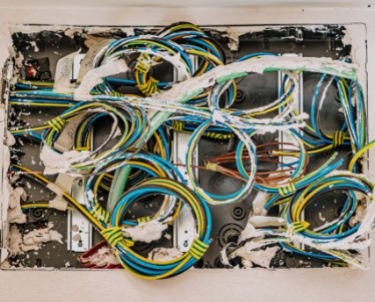
What Is an Arc Flash Risk Assessment?
An arc flash risk assessment is a systematic evaluation of a worker’s potential exposure to the thermal energy produced by an electrical arc.
Depending on the facility and project scope, the assessment may evaluate:
- The electrical equipment included in the study
- Available fault current
- Protective-device operating and clearing times
- Equipment configuration
- Working distance
- Calculated incident energy
- Arc flash boundaries
- Shock hazards and approach boundaries
- Appropriate electrical safe work practices
- Personal protective equipment requirements
- Equipment-labeling information
- Opportunities to reduce electrical risk
The completed assessment gives your organization equipment-specific information that can be used during job planning and electrical safety decision-making.
An arc flash assessment should not be confused with a visual inspection or the application of generic warning stickers. Accurate analysis requires current electrical-system information and an evaluation of how the system and its protective devices respond under fault conditions.
👉 Learn more about arc flash safety training.
Why Your Facility May Need an Arc Flash Study
Employees who inspect, operate, maintain, troubleshoot, test, or repair electrical equipment may be exposed to shock and arc flash hazards.
An arc flash risk assessment may be appropriate when:
- Employees perform energized electrical work
- Maintenance personnel open electrical panels or switchgear
- Electrical equipment lacks arc flash labels
- Existing labels are damaged, outdated, or based on unknown data
- The facility has never completed an arc flash study
- Electrical distribution equipment has been added or replaced
- Protective-device settings have changed
- A transformer, switchboard, panelboard, motor-control center, or generator has been modified
- The facility has expanded or undergone renovation
- One-line diagrams are incomplete or outdated
- An audit identifies gaps in the electrical safety program
- An electrical incident or near miss has occurred
- Management is developing an NFPA 70E electrical safety program
- Employees need equipment-specific information for PPE selection
- A client, insurer, safety consultant, or facility standard requests documentation
Even electrical systems operating at lower voltages can produce a dangerous arc flash under the right conditions. Voltage alone does not determine the severity of an event. Available current, protective-device clearing time, equipment configuration, working distance, and other factors can significantly affect incident energy.
What Is Included in an Arc Flash Risk Assessment?
The exact scope depends on the size, complexity, condition, and documentation of your electrical distribution system. A comprehensive project may include the following stages.
Project Planning and Scope Development
The process begins by identifying the facility areas, electrical systems, equipment, and operating conditions to be evaluated.
During project planning, we may review:
- Facility size and use
- Electrical-service characteristics
- Available drawings and records
- Equipment types
- Previous studies
- Existing arc flash labels
- Planned electrical upgrades
- Maintenance practices
- Employee work activities
- Operational or scheduling restrictions
Defining the scope at the beginning of the project helps create an efficient assessment and a useful final report.
Electrical Data Collection
Accurate study results depend on accurate field data. Electrical equipment and distribution-system information may need to be gathered from drawings, nameplates, protective devices, conductor information, settings, and available utility data.
Relevant information may include:
- Utility-service information
- Transformer ratings and impedances
- Switchgear and switchboard data
- Panelboard information
- Circuit-breaker types and settings
- Fuse types and ratings
- Conductor sizes and lengths
- Motor contributions
- Generator information
- Equipment grounding details
- System voltage
- Equipment configuration
- Normal operating conditions
Missing or inconsistent information may be documented for further review.
One-Line Diagram Review
A one-line diagram provides a simplified representation of the electrical distribution system and the relationships between major components.
An accurate diagram can help your organization:
- Understand how electrical power moves through the facility
- Identify upstream and downstream equipment
- Locate protective devices
- Support maintenance and troubleshooting
- Improve job planning
- Document system changes
- Prepare for future electrical studies
Where appropriate, the project may include reviewing, updating, or developing electrical one-line information based on the agreed scope.
Short-Circuit Analysis
A short-circuit analysis calculates the current that may flow during specific electrical fault conditions.
The results can help determine whether equipment and protective devices are appropriately rated for the available fault current. Short-circuit information is also an important input for incident-energy calculations.
Equipment with an interrupting or withstand rating below the calculated fault current may require additional engineering review and corrective action.
Protective-Device Coordination Review
Protective devices are intended to interrupt abnormal electrical current. Their settings and operating characteristics influence how quickly a fault is cleared.
Because the duration of an electrical arc can significantly affect incident energy, protective-device performance is an important part of an arc flash study.
A coordination review may help identify:
- Protective devices that operate more slowly than expected
- Settings that contribute to higher incident-energy levels
- Opportunities to improve system selectivity
- Potential conflicts between reliability and worker protection
- Areas requiring additional evaluation
Changes to protective-device settings should be carefully evaluated before implementation because they may affect equipment protection, system coordination, reliability, and safety.
Incident-Energy Analysis
Incident energy is the amount of thermal energy that may reach a surface at a specified working distance during an arc flash event. It is commonly expressed in calories per square centimeter.
The analysis considers system and equipment characteristics such as:
- Available fault current
- Arc duration
- Protective-device clearing time
- System voltage
- Equipment type and enclosure
- Electrode configuration
- Working distance
The calculated value can be used to help determine the arc flash boundary and the arc rating of PPE needed for a particular task or exposure.
Arc Flash Boundary Determination
The arc flash boundary is a distance from a potential arc source at which the incident energy is expected to reach a specified threshold.
Employees working within an established arc flash boundary may require additional protective measures based on the task, equipment condition, likelihood of occurrence, and calculated exposure.
The arc flash boundary is different from shock-protection approach boundaries. A complete electrical safety program should address both arc flash and electric-shock hazards.
Equipment Label Development
Arc flash labels communicate critical hazard information to employees who may interact with electrical equipment.
Depending on the selected format and applicable requirements, labels may include information such as:
- Nominal system voltage
- Arc flash boundary
- Calculated incident energy at the working distance
- Minimum arc rating of clothing or PPE
- Equipment identification
- Shock approach information
- Study or issue date
Labels should reflect the results of the facility’s assessment. Generic labels that are not based on the actual electrical system cannot communicate equipment-specific incident-energy information.
Findings and Recommendations
The final report may identify equipment, conditions, or study results requiring attention.
Recommendations may address:
- Missing electrical data
- Outdated documentation
- High incident-energy locations
- Protective-device settings
- Equipment-labeling needs
- Maintenance concerns
- Work-practice improvements
- PPE considerations
- Training needs
- Additional engineering analysis
- Electrical safety program updates
The report should give management a practical roadmap rather than simply presenting calculations without context.
Understanding High Incident-Energy Results
Some equipment may have incident-energy levels that make energized interaction especially hazardous.
A high calculated value does not mean that selecting heavier PPE is always the only or best response. The organization should first evaluate whether the work can be performed in an electrically safe work condition and whether the hazard can be reduced through engineering, maintenance, administrative, or operational controls.
Potential risk-reduction strategies may include:
- De-energizing equipment before work
- Adjusting protective-device settings after appropriate analysis
- Installing faster-acting protective devices
- Using maintenance-mode settings
- Installing current-limiting devices
- Using remote racking or switching
- Increasing working distance
- Reconfiguring the electrical distribution system
- Replacing obsolete or improperly rated equipment
- Improving electrical maintenance
- Restricting energized interaction
- Revising work procedures
Every proposed modification should be evaluated for its effect on system safety, reliability, coordination, and equipment protection.
Arc Flash Labels Are Not the Entire Safety Program
Applying labels is an important outcome of many arc flash studies, but labels alone do not create an effective electrical safety program.
Your organization may also need:
- A written electrical safety program
- Clearly assigned employee responsibilities
- Energized-work policies
- Lockout/tagout procedures
- Job-planning and briefing processes
- Employee qualification procedures
- Appropriate electrical PPE
- Inspection and maintenance programs
- Electrical safety training
- Periodic audits
- Procedures for updating the study
- Management support and enforcement
Everything Arc Flash can help connect your study results with broader arc flash facility compliance, NFPA 70E safety training, and arc flash PPE selection guidance.
When Should an Arc Flash Assessment Be Updated?
An arc flash study should be reviewed when changes to the electrical system or facility could affect the results.
A review may be needed following:
- Facility additions or renovations
- Changes to utility-service characteristics
- Transformer replacement
- Generator installation
- New switchgear or panelboards
- Changes to circuit-breaker or relay settings
- Motor additions
- Protective-device replacement
- Changes to conductor lengths or sizes
- Equipment relocation
- System reconfiguration
- A significant electrical incident
- Discovery of incorrect field data
- Changes in operating configuration
- Updates to applicable standards or calculation methods
Facilities should also establish a process for periodically reviewing their study, diagrams, labels, and electrical safety documentation.
Do not assume an existing label remains accurate after the equipment or its upstream electrical system has changed.
Facilities and Industries We Serve
Everything Arc Flash provides electrical risk assessment services for a wide range of facilities, including:
- Manufacturing plants
- Commercial office buildings
- Healthcare facilities
- Hospitals and medical offices
- Assisted-living and senior-care facilities
- Hotels and hospitality properties
- Municipal buildings
- Water and wastewater facilities
- Schools and educational campuses
- Warehouses and distribution centers
- Retail properties
- Multifamily and mixed-use buildings
- Data and telecommunications facilities
- Industrial operations
- Property-management portfolios
- Government facilities
- Contractors and service organizations
Projects can be scoped for a single building, a campus, or multiple facilities based on the organization’s requirements.
Arc Flash Assessments in Lake Worth and Palm Beach County
Everything Arc Flash is based in Lake Worth, Florida, and provides arc flash studies and electrical safety services throughout Palm Beach County and other areas of Florida.
Our service area includes:
- Lake Worth
- West Palm Beach
- Boynton Beach
- Delray Beach
- Boca Raton
- Palm Beach Gardens
- Jupiter
- Wellington
- Royal Palm Beach
- Greenacres
- Hypoluxo
- Juno Beach
- Riviera Beach
- Palm Springs
Local knowledge and responsive project coordination can be especially valuable when an assessment requires facility access, electrical data collection, discussions with maintenance personnel, and follow-up implementation support.
Why Choose Everything Arc Flash?
Everything Arc Flash specializes in arc flash hazards, NFPA 70E electrical safety, and facility compliance.
Clients choose us for:
- Specialized arc flash and electrical safety knowledge
- Clear explanations of complex study results
- Facility-specific assessments
- Practical implementation guidance
- Local service in Lake Worth and Palm Beach County
- Support for commercial, industrial, institutional, and healthcare facilities
- Integration with training, PPE, maintenance, and compliance services
- Reports designed to support real workplace decisions
Our goal is not simply to deliver calculations. We help organizations understand what the findings mean, how employees may be affected, and what actions should be considered next.
Frequently Asked Questions
What is the difference between an arc flash study and an arc flash risk assessment?
The terms are often used interchangeably. An arc flash study commonly refers to the technical analysis used to calculate incident energy and arc flash boundaries. A risk assessment applies the results to worker exposure, task likelihood, equipment condition, work practices, and protective measures.
Is an arc flash study required by OSHA?
OSHA requires employers to assess workplace hazards and protect employees from recognized electrical hazards. OSHA also recommends conducting an arc flash study for employers whose workers may be exposed to electrical hazards. The precise obligations that apply depend on the industry, work activities, equipment, and relevant OSHA standards.
What standards are used for an arc flash assessment?
Arc flash assessments commonly reference NFPA 70E for electrical safety-related work practices and IEEE 1584 for incident-energy calculation methods. Other OSHA regulations, National Electrical Code provisions, equipment standards, and industry requirements may also apply depending on the facility and project.
How long does an arc flash assessment take?
The schedule depends on the number of buildings, electrical-equipment count, availability of drawings, accessibility of equipment, system complexity, data quality, and required deliverables. A smaller facility may require less time than a large campus or industrial site with multiple electrical services.
Does equipment need to be shut down during the assessment?
Some information may be collected while equipment remains in service, but safe access and data verification requirements vary. Certain equipment may need to be de-energized before it can be safely opened or inspected. The fieldwork plan should be coordinated with facility representatives before data collection begins.
What information do you need to begin?
Helpful information may include one-line diagrams, electrical drawings, utility data, equipment lists, previous studies, protective-device settings, transformer information, generator data, maintenance records, and details about recent facility modifications. Missing information can be discussed during project planning.
Can you update an existing arc flash study?
Yes. An existing study may be reviewed and updated when reliable electronic files, supporting calculations, drawings, field data, and previous assumptions are available. The scope depends on the age and quality of the existing documentation and the changes made to the electrical system.
Do you provide arc flash labels?
Labeling can be included as part of the project scope. Labels should be based on equipment-specific study results and should be installed in coordination with the facility’s electrical safety program.
Will the study tell us what PPE employees need?
Incident-energy results can help determine the minimum arc rating needed for protection from the calculated thermal exposure. PPE selection must also consider the task, shock hazard, body areas exposed, equipment condition, applicable standards, and the organization’s work procedures.
Does an arc flash study replace employee training?
No. A study provides information about the electrical system and potential exposure. Employees must also be trained for their responsibilities and the hazards associated with their work. Learn more about our arc flash safety training.
Is an arc flash label enough to make equipment safe?
No. A label communicates hazard information, but it does not eliminate the hazard or replace de-energization, proper maintenance, employee training, safe work procedures, job planning, or correctly selected PPE.
Do you serve facilities outside Palm Beach County?
Yes. Everything Arc Flash is based in Lake Worth and serves Palm Beach County, South Florida, and other Florida locations depending on the project.
Contact Everything Arc Flash
Do not wait for an incident, audit finding, or equipment failure to discover gaps in your electrical safety program.
Everything Arc Flash can help you evaluate your electrical system, identify arc flash hazards, develop equipment-specific information, and create a practical plan for improving workplace electrical safety.
Call: 1-888-NFPA70E or 1-888-637-2703
Email: info@everythingarcflash.com
Address: 7855 Willow Spring Drive, Suite 715, Lake Worth, FL 33467
Hours: Monday–Friday, 8:00 a.m.–3:00 p.m.