Arc Flash Risk Assessments in Delray Beach, FL
Arc flash risk assessments in Delray Beach, FL for commercial and industrial facilities. Improve electrical safety with arc flash studies and NFPA 70E guidance.
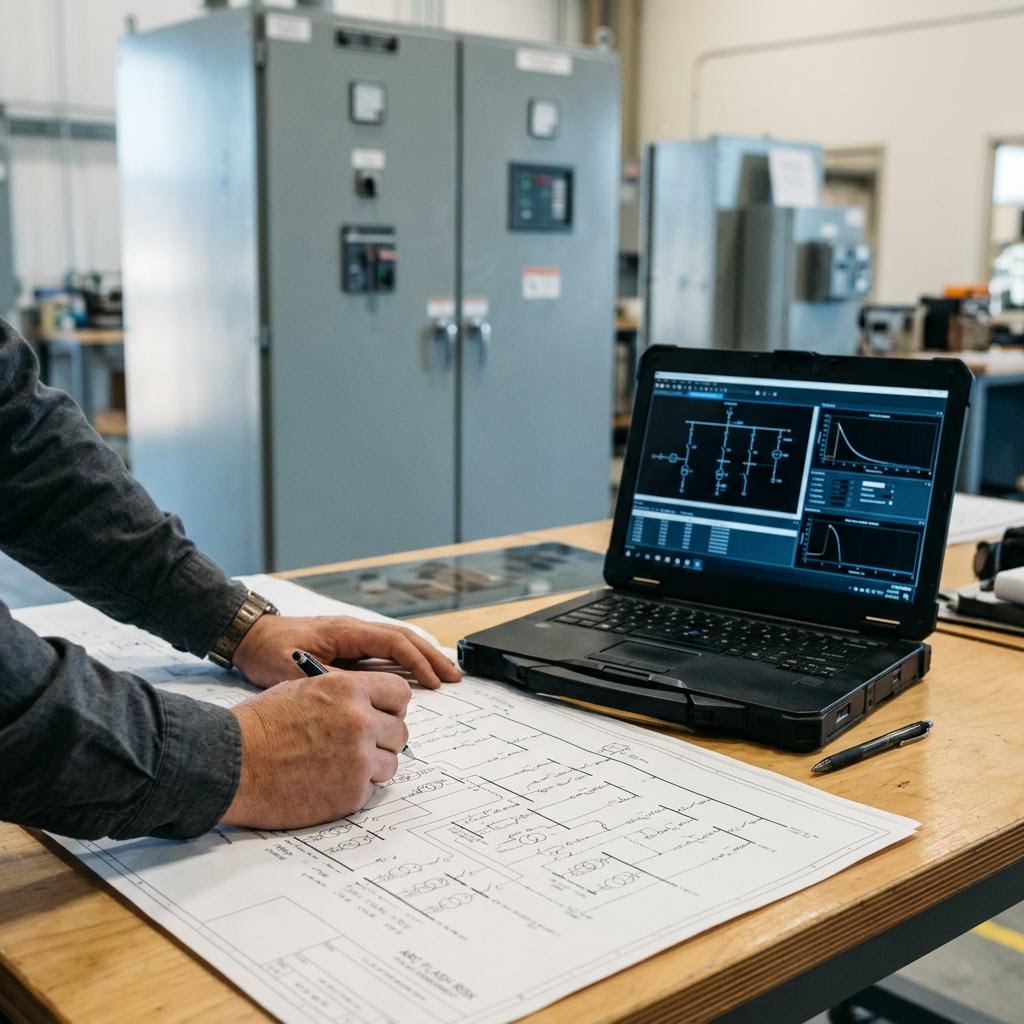
Renovations can change a building's electrical demands long before anyone revisits its arc flash documentation. A hospitality property adds equipment, a healthcare facility reconfigures space, or a commercial owner replaces a distribution component. Existing labels can remain on the wall even when the information supporting them no longer describes current conditions.
Everything Arc Flash helps Delray Beach facility managers and commercial property owners evaluate those uncertainties through arc flash risk assessments. The aim is to connect the electrical system that exists today with usable hazard information, documented findings, and a clearer basis for planning maintenance and employee protective measures.
Our Arc Flash Risk Assessment services support commercial, industrial, and institutional properties in Delray Beach, FL. Tell us about recent improvements, aging equipment, previous study records, and upcoming work. Those details help establish the right assessment scope rather than assuming every building with an existing label is already up to date.
A Changing Property Needs Current Electrical Information
In a mixed-use building, different occupants may request alterations at different times. Hospitality operations may upgrade kitchens, laundry systems, cooling, or guest facilities. Healthcare and institutional properties can introduce new equipment while retaining older distribution infrastructure. These are examples of changes to investigate, not evidence that a particular Delray Beach property has an unsafe system.
Start by comparing the date and scope of the last study with the building's alteration history. Identify which panels, feeders, sources, and protective devices were affected. Even a well-maintained file can be incomplete if project closeout documents were never transferred to the facility team. Resolving that gap is more useful than relying on the appearance of a label.
- F01Healthcare facilities balancing building updates and operational needs
- F02Hospitality properties adding equipment or renovating service areas
- F03Mixed-use and commercial buildings with tenant-driven electrical changes
- F04Institutional properties maintaining older infrastructure through phased improvements
Build the Assessment Around Renovations and Existing Conditions
- 01
Begin with a practical history of the property: recent renovations, replaced breakers or transformers, revised utility service, new loads, and known documentation issues. Include both completed work and planned projects. This allows the project team to distinguish the present condition being assessed from proposed conditions that may require a separate evaluation.
- 02
Collect the earlier report and its supporting drawings, not just photographs of the labels. Equipment characteristics, conductor details, source information, and protective-device data may require verification. Where information is unavailable or equipment cannot be accessed safely, the limitations should be identified explicitly instead of hidden behind an apparently precise result.
- 03
Coordinate field activities with the property's operational requirements. Healthcare services, guest areas, tenants, and institutional activities may constrain access or outage timing. Reviewing the Arc Flash Risk Assessment Process helps property managers prepare questions about scope, safe access, documentation, and the sequence of work without attempting hazardous data collection themselves.
What Updated Labels Should Communicate
A label is a communication tool tied to a particular piece of equipment and the conditions analyzed. Its supporting information may include incident energy at a working distance, an arc flash boundary, and other applicable hazard details. Confirming the equipment identity and study basis is essential before treating a replacement label as an improvement.
Outdated information can be misleading in either direction. A change does not necessarily make every calculated value higher, and a lower result does not establish that work can proceed without other controls. The engineering evaluation determines the effect of the relevant system changes; staff should not infer the answer from the size of a new load or the age of a building.
Maintain an organized relationship between equipment identifiers, one-line drawings, calculation records, and labels. If a room contains several similar panels, ambiguous names can undermine otherwise sound documentation. Agree on how corrected information will reach employees, contractors, and the people responsible for future renovations.

Aging Equipment and Electrical Maintenance Planning
The age of electrical equipment is a reason to investigate records and condition, not a substitute for an assessment. A study does not automatically certify the physical condition of every component. Likewise, a maintenance visit does not automatically update incident energy calculations. Clarifying those boundaries prevents property owners from expecting one service to answer questions outside its scope.
Protective-device performance is particularly important because clearing time influences arc exposure. Information about inspection, testing, known defects, and maintenance history can be relevant to follow-up recommendations. A device represented in a model must be capable of operating as expected for the analysis assumptions to remain useful.
Use the findings to help prioritize questions for the people responsible for engineering and maintenance. Some issues may need further inspection or equipment replacement planning; others may concern documentation or procedures. Arc Flash Safety-Related Electrical Maintenance Requirements explains why maintaining the system and understanding its hazards are connected responsibilities.
Safer Work Practices for Occupied Delray Beach Properties
Occupied buildings require careful separation of operational convenience from electrical work authorization. A need to keep a guest service, tenant business, or clinical function running does not itself justify energized work. Qualified personnel must consider applicable requirements, task conditions, and the means of establishing an electrically safe work condition.
Hazard information should be available before maintenance is scheduled. Discuss boundaries, restricted access, communication with occupants, and coordination among employers or contractors where relevant. The assessment helps inform that planning, but the actual work requires appropriate procedures and a task-specific evaluation rather than automatic reliance on a historical report.
PPE is one part of protection, not the entire strategy. Arc-rated clothing addresses thermal exposure within its intended use, while shock protection and other hazards require separate consideration. Arc Flash PPE Selection Guidance can help managers frame questions for their qualified electrical and safety personnel.
Keep Future Renovations Connected to the Safety Program
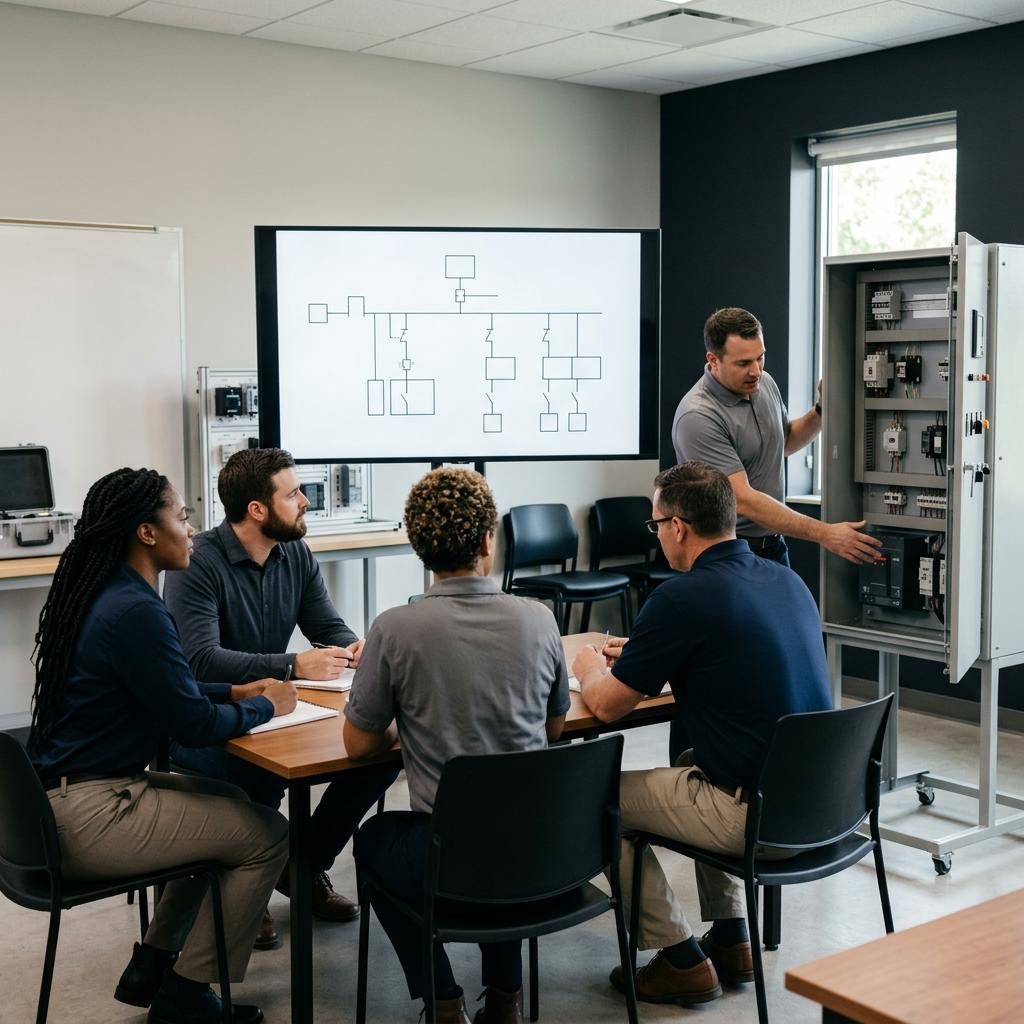
Create a handover requirement for every electrical improvement project. Request updated drawings, equipment information, relevant settings, and confirmation of whether the study and labels need revision. Assign a person to receive those records, since an accurate contractor file is not useful to maintenance staff who cannot find it.
Employees also need to recognize when labels or documentation raise questions. Complementing the technical assessment with local electrical safety instruction can improve understanding of the information and its limits. Delray Beach training is available as a related service rather than a replacement for studying the property's distribution system.
Plan the scope around your actual Delray Beach facility.
Delray Beach Property Assessment Questions
Does every renovation require completely new calculations?
Not necessarily. The relevant electrical changes and the quality of the existing study need to be evaluated. A finish-only renovation differs from replacing distribution equipment or altering supply arrangements. Share the actual electrical scope so qualified reviewers can determine what needs updating and whether previous information remains usable.
Can a hospitality property plan the assessment around guest operations?
Operational constraints should be raised when the scope is discussed. Access, documentation, and any required outages can then be planned with the property's team. That coordination cannot guarantee that every activity can occur without disruption, and it must never replace the controls needed for safe electrical access.
What if labels are present but the old report is missing?
Treat the missing report as a documentation limitation. A label generally does not provide all inputs, assumptions, configurations, or calculations needed to evaluate its continued applicability. Provide photographs taken safely and any related records, then discuss the verification needed rather than assuming the label proves the analysis is current.
Is an arc flash study a condition assessment of old equipment?
It evaluates arc flash hazards using relevant electrical information and defined assumptions. Physical condition, testing, and maintenance questions may require additional services or investigation. The assessment scope should make that distinction clear so aging equipment concerns are addressed by the appropriate qualified professionals.
How should healthcare or mixed-use managers prepare?
Identify facility contacts, available electrical records, recent projects, tenant alterations, and restrictions on access or shutdowns. Include the people responsible for building operations and electrical work. Early information exchange helps define coverage and scheduling without asking unqualified staff to inspect exposed energized parts.
Contact Everything Arc Flash for Delray Beach Assessments
Contact Everything Arc Flash about your Delray Beach commercial, healthcare, hospitality, industrial, or institutional property. Describe the building's electrical history, current maintenance priorities, and any planned renovations. We can discuss how hazard analysis, equipment labeling, and assessment records fit the needs of the people managing your facility.
Reach our team at 1-888-NFPA70E / 1-888-637-2703 or info@everythingarcflash.com. Have an older report or a list of changed equipment available if possible; you do not need to resolve every documentation question before starting the conversation.