Arc Flash Risk Assessments in Boca Raton, FL
Professional arc flash risk assessments in Boca Raton, FL. Arc flash studies, incident energy analysis, and electrical safety solutions for commercial facilities.
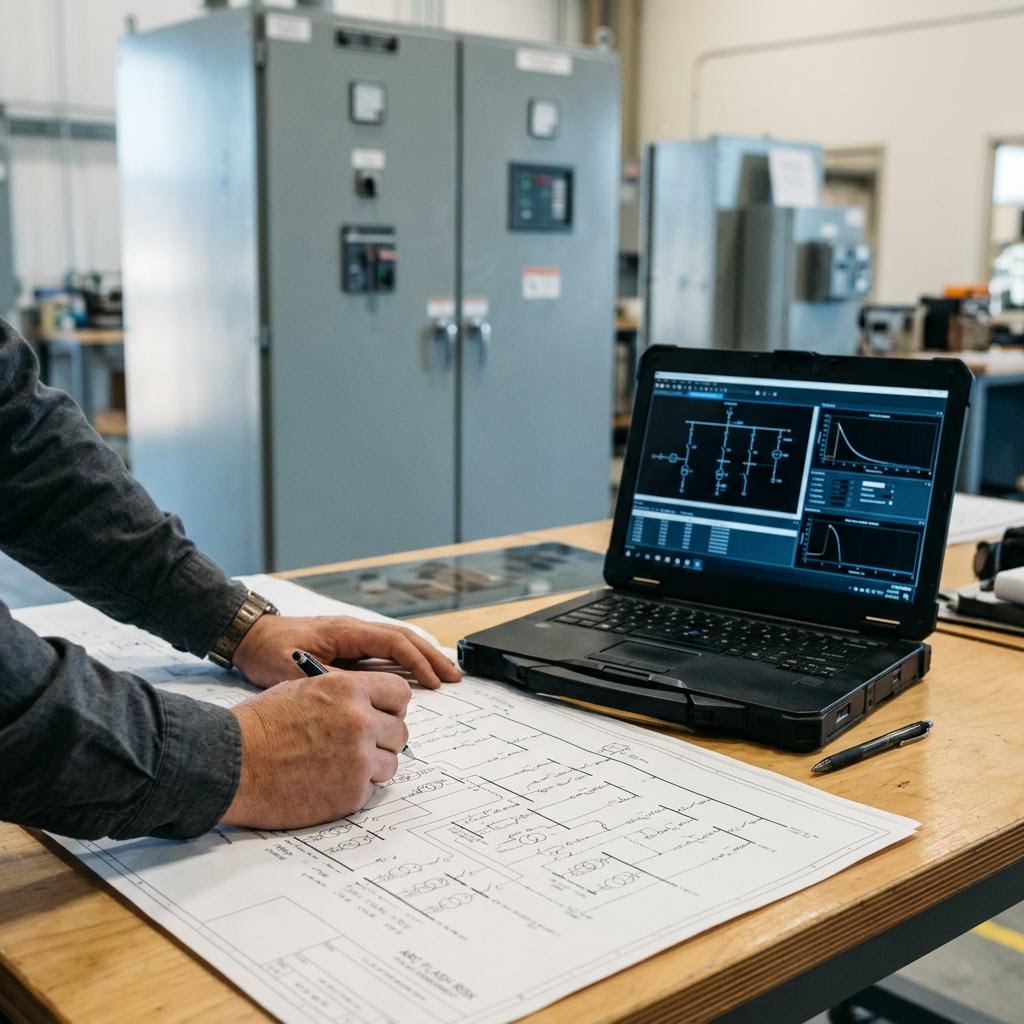
The electrical infrastructure behind a corporate campus or medical complex can involve several buildings, distribution levels, and sources of power. A useful arc flash assessment must explain which of those arrangements it represents. An isolated equipment label cannot communicate the full relationship between the utility supply, transformers, feeders, and protective devices.
Everything Arc Flash provides arc flash risk assessments in Boca Raton, FL, for commercial, corporate, healthcare, educational, and technical facilities. Our service discussions focus on the system information, analysis boundaries, and documentation that facility directors and building engineers need when managing complex electrical assets.
Whether you oversee one medical building or a multi-building property, begin by identifying the decisions the assessment must support. Electrical maintenance managers need equipment-specific information, while environmental health and safety personnel need findings they can connect to procedures and employee protection. Our Arc Flash Risk Assessment services bring those operational questions into the scope discussion.
Define the Electrical System Before Evaluating Exposure
A campus name is not a sufficient study boundary. Separate utility services, interconnected distribution, central plant equipment, and backup supplies can create different analytical requirements. Establish which equipment is included, where the relevant sources are located, and how normal and alternate operating arrangements will be represented. Document exclusions so another team does not assume they were covered.
This distinction matters in Boca Raton properties where building engineers, tenant representatives, and outside electrical contractors each hold part of the available information. A coordinated equipment inventory helps align their records. It also provides a reference for future renovations, when a change in one building may affect the electrical information used elsewhere.
- F01Corporate campuses with central distribution and multiple occupied buildings
- F02Medical buildings using normal and alternate electrical supplies
- F03Educational institutions with changing laboratories and technical equipment
- F04Commercial and technical facilities managing extensive feeder networks
How the Engineering Studies Relate to Each Other
- 01
Short-circuit analysis evaluates prospective fault currents within the modeled system. Source characteristics, transformers, conductors, motors, and operating configurations influence those values. The information can support evaluation of equipment duties and forms part of the basis for subsequent protective-device and arc flash analysis. The studies are related, but they are not interchangeable reports.
- 02
Protective-device coordination examines how devices respond across relevant current levels and how their operation relates to other devices. For arc flash calculations, the time taken to clear an arcing fault is especially important. Coordination and incident energy reduction must be considered together, since a setting change can affect both operational performance and the exposure being evaluated.
- 03
Incident energy calculations use applicable methods and equipment information to estimate thermal exposure at specified working distances. Relevant configurations and assumptions need to be traceable. Reviewing the Arc Flash Risk Assessment Process gives facility directors a practical overview before discussing exactly which analyses, equipment, and project deliverables will be included.
Documentation That Building Engineers Can Maintain
The most valuable records describe the system clearly enough to support later decisions. Agree on equipment naming, drawing conventions, configuration descriptions, and the format of the final findings. Identify the connection between an equipment identifier in the report, its position on a one-line diagram, and the label attached to the actual asset.
Assemble available drawings, utility information, transformer data, protective-device records, conductor information, and previous calculations. An inherited report may contain assumptions that need to be checked rather than reused automatically. Record inaccessible equipment and unresolved inputs explicitly, including how those limitations affect the interpretation of the results.
For a large Boca Raton property, decide who controls the authoritative documentation after the project. Facilities, engineering, and safety teams should not maintain conflicting versions without a revision process. A clear handover helps future employees understand which study is current and which changes have occurred since its completion.

Generators and Alternate Sources Need Defined Operating Cases
Backup generation can change the available current and the way protective devices respond. A configuration with less available fault current can sometimes produce a longer clearing time; it should not automatically be treated as the lower-exposure case. The relevant utility and generator arrangements must be identified and evaluated according to the project scope.
Transfer equipment, permitted interconnections, and operating restrictions deserve attention when defining those cases. Do not assume that every theoretically possible combination is an authorized operating mode. Equally, do not omit an arrangement that qualified facility personnel actually use. The engineering model should correspond to documented, applicable operating conditions.
When generator capacity, switchgear, or transfer arrangements change, review the effect on prior studies and labels. Technical recommendations may require coordination with design engineers, equipment specialists, and maintenance providers. No one should experiment with switching configurations or protective settings merely to reproduce a study scenario.
Translate Analysis into Protective Measures
An engineering result needs an operational interpretation. Maintenance managers should know the equipment covered, the meaning of the reported working distances, and any limitations affecting the work being planned. Environmental health and safety personnel can then connect the findings to procedures, access controls, training, and the employer's electrical safety program.
Arc flash boundaries concern thermal exposure, while shock approach boundaries address a different hazard. PPE decisions must reflect the task and applicable assessment information, not simply the most convenient label value. Arc Flash PPE Selection Guidance describes related considerations without replacing the judgment and responsibilities of qualified personnel.
Maintenance practices also affect confidence in the assumed operation of protective equipment. Review relevant testing and service information when determining follow-up actions. Arc Flash Safety-Related Electrical Maintenance Requirements explains why preserving equipment performance belongs alongside the calculations and labeling, especially where multiple departments rely on the same distribution infrastructure.
Make Change Control Part of Campus Operations
Capital projects, equipment replacements, and temporary operating changes should have a route back to the people maintaining the study. Capture changed ratings, settings, feeder details, and source arrangements before project closeout. Include an assessment-impact review instead of waiting until every building on the property has completed its next renovation cycle.
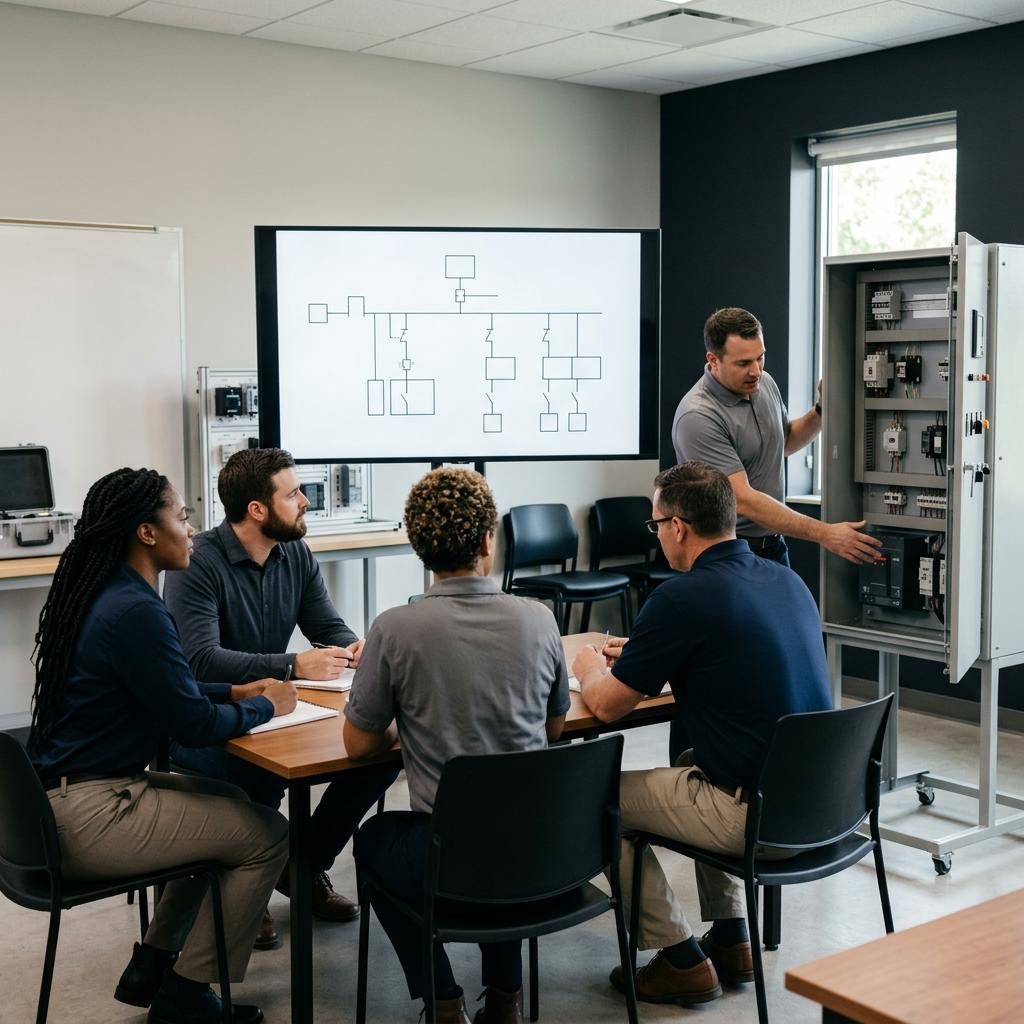
Employee understanding is another continuing responsibility. Building engineers and safety teams can use updated documentation when planning appropriate instruction, while contractors receive the information relevant to their assignments. Boca Raton electrical safety training is a complementary service for teams that need help interpreting hazards and safe work practices.
Plan the scope around your actual Boca Raton facility.
Boca Raton Engineering and Facility FAQs
Is a short-circuit study the same as an arc flash assessment?
No. Short-circuit work evaluates fault-current conditions, while arc flash analysis addresses thermal exposure under defined assumptions. Protective-device behavior connects those subjects. The assessment discussion should identify which supporting studies are included and which existing records can be verified and used, rather than assuming one report answers every question.
Can one campus have more than one relevant operating configuration?
Yes. Utility feeds, generators, transfer equipment, and authorized switching arrangements may create several cases. The project should specify the cases analyzed and explain the limitations. Those definitions help facility personnel understand when a label or calculation applies and when an unreviewed operating change needs engineering attention.
Who should participate from a Boca Raton medical or corporate property?
Include people responsible for electrical engineering records, daily maintenance, safety procedures, and operating authorization. A facility director can coordinate access and priorities, while building engineers and qualified electrical personnel provide system knowledge. Specialists or contractors may hold additional information needed to define the equipment and configurations accurately.
Does a low incident energy result mean no protection is required?
No. The result concerns modeled thermal exposure at an identified distance. Shock, equipment condition, and the work activity still need evaluation. It does not remove requirements for safe work practices, appropriate qualifications, or establishing an electrically safe work condition where required.
What should we retain after the assessment is delivered?
Retain the agreed study documents, drawings, equipment identifiers, evaluated configurations, assumptions, label information, and recommendations. Keep revision records and completed actions with them. The objective is a controlled reference that future engineers and maintenance personnel can interpret, not an isolated folder that loses its connection to the equipment.
Contact Everything Arc Flash for Boca Raton Assessments
Contact Everything Arc Flash to discuss your Boca Raton campus, medical building, educational property, or technical facility. Explain the approximate distribution-system scope, alternate power sources, available engineering records, and the people who manage electrical changes. That information helps frame a useful conversation about analysis, documentation, and equipment labeling.
Call 1-888-NFPA70E / 1-888-637-2703 or email info@everythingarcflash.com to start planning. If your responsibilities extend across several South Florida properties, Areas We Serve provides the existing city-specific service links.